
30 years, 10,000 adults and children who stutter, 20+ published studies
Questions?
Email, call, or text us: 1-720-217-6589.
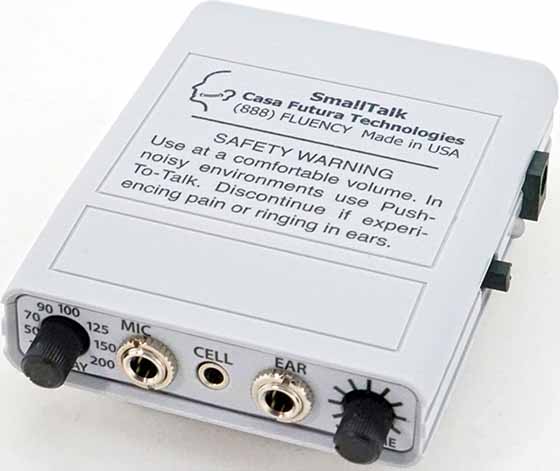
SmallTalk DAF/FAF stuttering therapy device
Three Ways To Fluent Speech

- Therapy practice. Use our School DAF in the speech clinic or at home.
- Telephone calls and Zoom meetings. Plug in our Basic Fluency System to make your phone and laptop help you communicate fluently.
- Face-to-face conversations. Our SmallTalk includes a throat microphone and Bluetooth bone-conduction headphones to communicate anywhere, anytime.
How do DAF and FAF work?
With delayed auditory feedback (DAF) and frequency-altered auditory feedback (FAF) you’ll hear your voice slowed and shifted to a deeper pitch.
- Slow, relaxed, confident speech.
- Improved vocal fold awareness and control.
- Use fluency shaping stuttering techniques anywhere, anytime.
Over time your fluency improves and you need the device less and less (carryover fluency).
DAF and FAF correct neurological abnormalities associated with stuttering.
Proven effective in 20+ studies
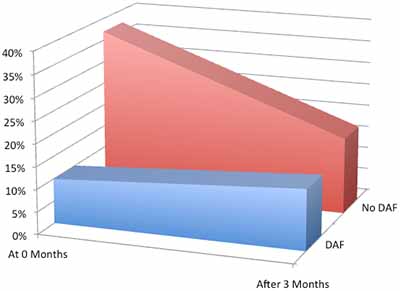
Casa Futura Technologies devices immediately reduced stuttering 70% in nine adults who stuttered severely. Then they used the devices thirty minutes per day, without speech therapy. After three months they had 55% carryover fluency (when speaking without the devices) and no significant drop from the 70% effectiveness when wearing the devices (Van Borsel, 2003). More studies.
Free for most Americans
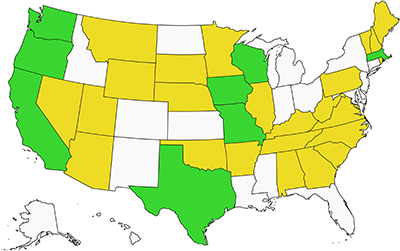
Eight states provide our devices free to qualified persons who stutter. 25 more states will consider persons who stutter on a case-by-case basis. The VA provides our devices to approved veterans in every state. If you’re looking for a job your state’s vocational rehab may pay for speech therapy, provide a device, and help you get hired. More discounts and subsidies.
Face-to-face fluency

Our throat microphone improves awareness and control of your vocal fold vibrations or phonation. This is the foundation of stuttering therapy. The throat microphone eliminates background noise and is comfortable and inconspicuous to wear all day.
The SmallTalk includes your choice of the best earpieces.
- Bluetooth bone-conduction headphones. No wire, no blocking your hearing, easy to slip on and off.
- Acoustical coil for stealth and comfort. Used by television performers and military personnel.
- Wired earbuds.
All of our earphones and headphones reproduce the full range of the human voice.
Connect to
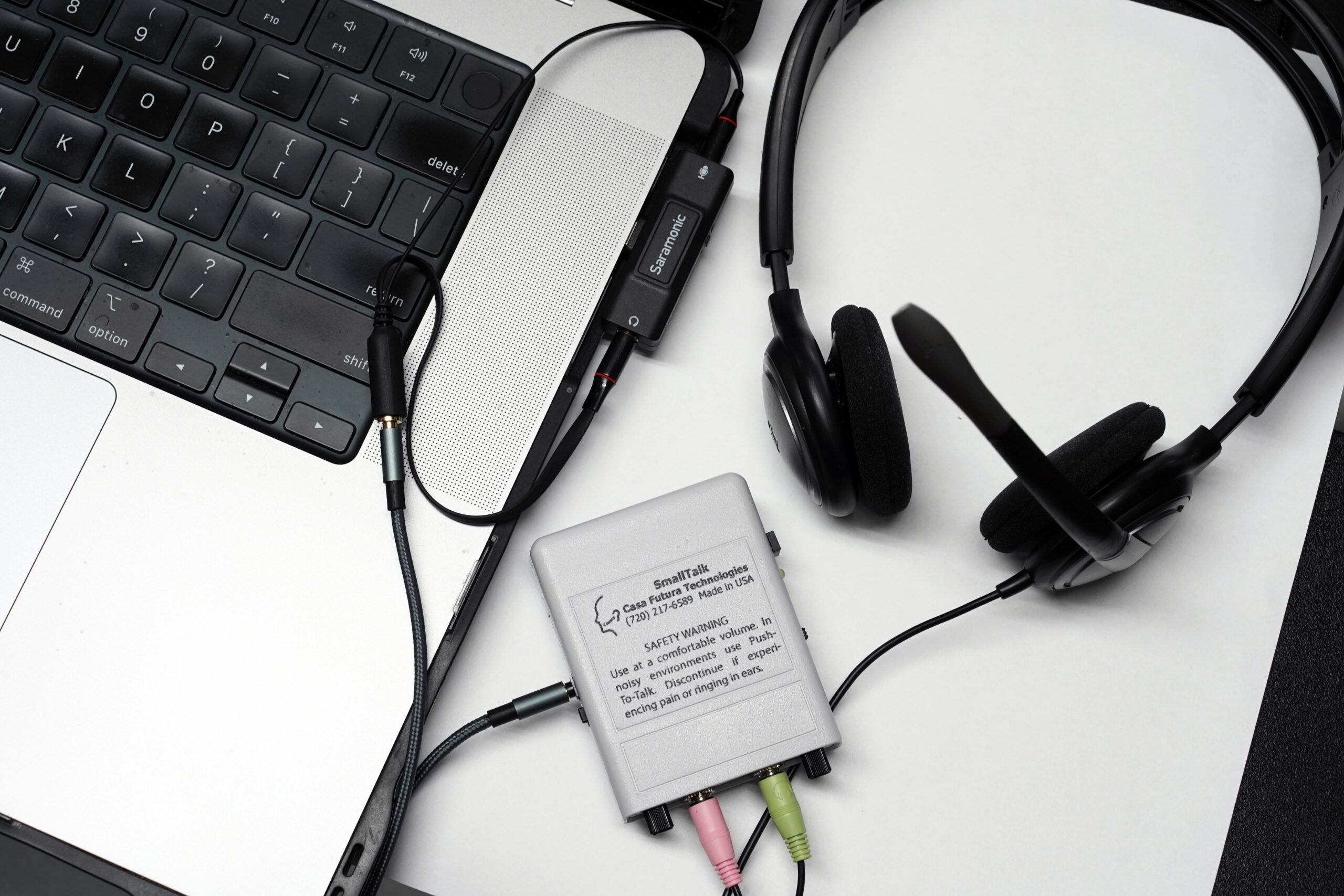
Plug into phones and computers for fluency on calls and Zoom meetings. You’re using electronic devices to communicate—your devices should improve your fluency.
- iPhones (USB-C and Lightning)
- Androids
- Laptops
- Landlines
- Office telephones
What I Do For Fluency
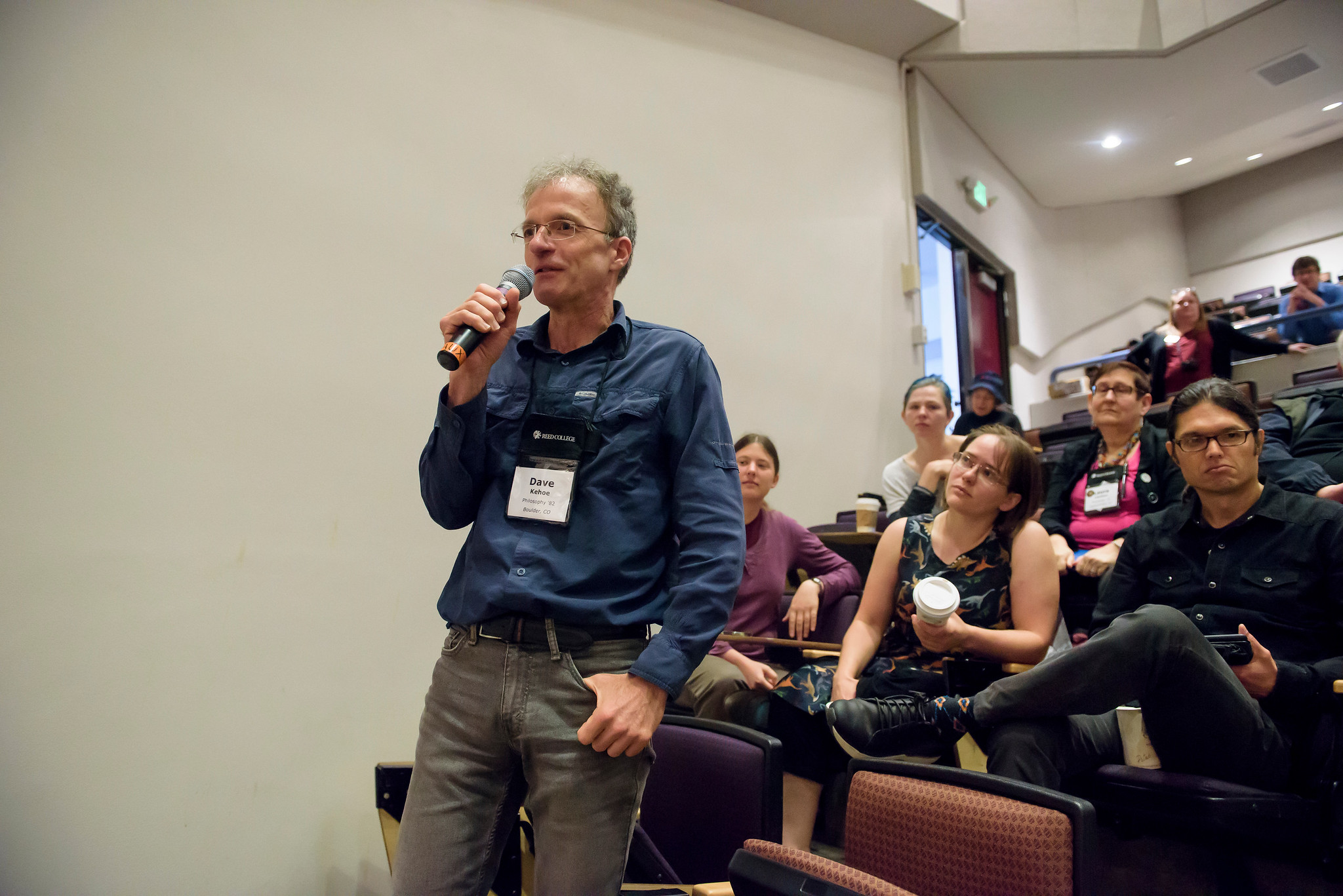
- Every day I do 30 to 45 minutes of speech therapy. I take a walk in the park, get my steps in, and maintain my fluency. Download my list of 500 words for practice.
- I take 300mg of thiamin (vitamin B-1). Proven effective for children and adults who stutter.
- I plug my SmallTalk into my laptop or phone for Zoom meetings and calls.
My book Making Stuttering Therapy Work is available on Amazon.
Or watch my videos on YouTube and TikTok.
Making Stuttering Therapy Work explains how each stuttering therapy works, how to maximize its effectiveness, and what to do if a therapy doesn’t work for you.

We send out an email newsletter usually twice a year, during National Stuttering Awareness Week (2nd week in May) and on October 22, International Stuttering Awareness Day.
- Recent scientific papers about stuttering therapy.
- New products and accessories such as microphones and earphones.
- New stuttering therapy ideas you can try.
- Discount codes to save hundreds of dollars on our devices.
To see the SmallTalk reviews view this website on a computer.
SmallTalk Reviews
Submit your review | |
I am an SLP who trialed the SmallTalk device with a client of mine who stutters. I worked directly with the owner of Casa Futura Technologies and cannot recommend him enough. He was knowledgeable, pleasant to work with, and provided wonderful support for myself and my client. He was very responsive to my many emails/questions and provided device training to myself and my patient via a Zoom meeting. The SmallTalk device itself was small, discreet, and easy to operate with Mr. Kehoe's instructions. I felt that he really had my client's best interest at heart and was honest with me regarding limitations of the device if used with bluetooth technology. I had a very positive experience working with this vendor and learned a lot. If you are clinician considering a device for one of your patients, I highly encourage you to reach out to Mr. Kehoe.
For over twenty plus years, I have suffered from a speech impediment that almost crippled my well-sense of being. Always having trouble following up with folks or how to just carry on a conversation and it that has been my downfall. Then it came in the mail. I tried on the device and from the moment it was turned on my life changed. My mom, sister and friends say how smooth my speech is and that they can hear every word.
I am just in awe with this device!! As soon as it came in the mail, my heart drop but I was extremely hesitant to try it out once I got home. After my first use of the machine and being able to have a whole conversation with friends and family, I knew change has come. Being able to pronounce words that I thought I would never say has brought so much joy! Thank you, sir. You are a miracle worker
Thank you so much, sir. Can’t stop smiling and it helped me give up smoking :-)
You deserve an award for this accomplishment. Thank you for giving me back control .
I've stuttered for a lifetime and have participated in many speech therapies, none of which helped. About the age of 50, I discovered the device which was amazing and that helped tremendously. I highly recommend it's use. Using the device gave immediate fluency, the confidence and the feedback that I could really speak without stuttering. I used the device on a regular basis and discovered that a lot of stuttering is a "learned behavior" (habit) that creates needless fear of speaking. The unit allows me to comfortable slow my rate of speaking, actually hear my fluency, as well as breath normally. Gradually I stopped using Small Talk as my fluency improved. From time to time I'll reuse the device when my speech becomes sloppy and it's use gets me back to normal. It's great to pick up the unit whenever I want to get back on track...that independent, "can do feeling," is wonderful!
I am so happy! All the day, I want to say "You are a Genius! Thomas are really a Genius!" I never expect the effect of the device are so powerful!
My original wish is just the anti-stuttering device's cooperating with fluency shaping techniques can help our people who stutter (PWS) achieve fluency.
But until now, I can achieve fluency in the precondition that I have not used any fluency shaping techniques to do any control.
Your device brings instant results!
Most important of all is that it also works under high stress situations!
In the day that I received the device, I have tried that device in many place. At first, I tried to contact strangers to speak in the phone, I was so surprised to speak very fluently. Then I come to restaurant to order the food, I could insist to say anything that I really would like to express fluently.
I am really so excited! This device can help me overcome obstacles, and let me restore the ability to do lots of things which was limited by fluency disorders in the past several years.
Also, I agreed that the AAF device itself can help PWS achieve 80% fluency. The device combined with a very little fluency skills can let PWS achieve 100% fluency easily. Note, PWS may benefit very little or nothing from the simple fluency shaping techniques of speech therapy, because that may not work under high stress situations or have to rely on lots of daily speech practice to maintain fragile fluency. Therefore, not recommend spend huge money to do the very expensive speech therapy, which may benefit PWS very little. Instead, the best treatment nowadays, is the AAF device combined with a little control of fluency shaping techniques.
I am a closet stutterer. There are only a handful of people professionally who probably know that I stutter (in my personal life there is only my family that knows, but this includes my extended family including in-laws, etc). Part of my job requires participating in, and in many instances faciltating large conference calls where there can be 5-10 or more people on the call. In this meetings, there are frequently attendees whose names are very difficult for me to say, and sometimes impossible depending on where I need to use the name in a sentence.
Within days of receiving SmallTalk, and for the first time in my life, I was able to say some (I have not tried all of them yet) of those names in what to me is a difficult circumstance to speak in (conference call). A key reason why I believe SmallTalk is so effective over the phone is because I am able to hear my (delayed/altered) voice in the same headphones as the conference call, and the immediate effect was a substantial reduction in the vocal tension that always accompanies this circumstance. In addition, I also feel that it was beneficial that the Smalltalk is not voice activated, since the first words that I may need to say are the ones that I am having the most trouble with. To say that this experience was liberating is an understatement.
Thanks—At session to set up Patient and Mom loved the SmallTalk. It was amazing the improved speech and reading he had.
Robert Grider, SLP
Minnesota Voice & Speech Clinic
I got my small talk and wow what a difference it has already made I went to the mall and spoke to everyone who was wanting to talk and I even went to the drive thru and had no issues with the person understanding me. Still waiting to get it approved to use at work might have to get the throat mic before it will get approved but cant wait till everyone who comes to me at work with questions to be able to explain things to them without it taking forever to get it out and them to understand me.
Thanks a lot of coming up with this device Speecheasy has nothing on you.
I watched the video it came with and I do not completely understand the stretching the vowel exercise but maybe I'll catch on. It was a great video about you are in theater that's great I would love to have an opportunity like that.
Very nice to have found out about you and use your device.
Shane Furnish
Prentiss High Bay
My name is Eric; I'm twelve years old. I have used the SmallTalk with the headphones since July.
I began speech therapy when I was five and continued when I went to public school because I was having trouble with my sounds and was very dysfluent. I was diagnosed as being a stutterer, although I never stuttered. My speech was terrible and no one understood me. Every year I had a new speech teacher who used ineffective ways to talk. In fourth grade I began private speech therapy.
Private speech therapy worked better for me than school therapy. I only worked on my "r" sounds and not dysfluency. My speech therapist did not think I stuttered, but did not know what I was doing. My speech therapist received a call from another client's mother inquiring about cluttering. After reading an article about cluttering, she realized that I had tachyphemia. Unlike stuttering, tachyphemia is not a speech disorder. It is a rare neurological disorder. This disorder does not improve with traditional stuttering therapy. So Ms J. ordered the SmallTalk for me after I agreed to wear it and attend therapy every day for the rest of summer.
When I started school, everybody understood me better and paid attention when I talked to them. At first, I tried to wear the headphones the entire school day, but it was too hard so I didn't wear them at all. So then I changed to just wearing them for two hours. I'm wearing headphones so I don't have to listen to other noises while using my SmallTalk.
The SmallTalk is easy to use; I usually "wire up" in the morning for my Public Speaking class around 9 AM, and I wear the headphones until lunch around 12 noon. After I take SmallTalk system off, I store it in my laptop case so I always know where it is. After some difficulty, I now remember to take it home, so I can try to use it at home.
I don't really think it is difficult to use the SmallTalk because I only use it 3 hour a day. This system has made a big difference in my speech because I am fluent and talk more slowly. My friends and teachers can understand my speech for the first time.
This testimonial was dictated to Janet Mills [SLP] by Eric.
I trialed a DAF/FAF device from Casa Futura Technologies in the US. A simple small device half the size of a pack of cards with ear plugs or a headset (social circumstances permitting) it is portable and hides well in clothing. The rate/delay of feedback in the ear, pitch and volume can be altered ranging from Darth Vader to Minnie Mouse. I plugged myself in, made some calls and it worked with success that I'd never experienced before. Interestingly Darth Vader works for business and Minnie Mouse handles social calls. This time I've ditched the self analysis. I'm so over why it works; I just need to get the job done. Any drug or device that gives a quick result and a buzz high leaves me wary of using it too much too often and it becoming just another hit and miss on a good or bad day. I save it for the phone or selective challenge situations and the 'magic box' concept seems to be holding.
It's pointless to speculate if it will work the same for you. It's genuine to tell you that this stutterer is sounding like a regular human being on the phone and that the more important the call is to get it right the wider the grin once it's achieved. This is a tax deductable investment that has already earned it's keep on the job. I doubt the ATO would question it being a vital tool in my workplace after a simple with and without demonstration at my desk in an open plan office.
Helen Agnew
from the Australia Speak Easy newsletter
The SmallTalk really did a miracle job on my stutter, the result was amazing! I can feel it, it teaches me to relax and more calm, this device gives me self confidence! I can talk now to people and answer phones without any fear at all, also last night I attended a party, I was surprised that I can talk already even without using the device.
Thank you so much Sir!
Josito Dondon
I think you should get a Nobel Prize for your work in the SmallTalk. It is a boon to folks like myself who can't say two words without the device, and I thank you with all my heart for your caring. Kay McNeal let me read your book, and I think it is marvelous, truly, you are such a dedicated person in your field, and again, I must thank you for being so. You remind me of my son and my husband; they are so dedicated in their work (they are trial lawyers) and they are so sincere and that's why they get good results, like yourself.
M.J.L.
Cleveland, Ohio